
Murder in Knightsbridge
the tragic death of actor Peter Arne

[Note: this article contains content that may be distressing or triggering for some readers. There are graphic descriptions of violence, murder and suicide. Please exercise caution when reading.]
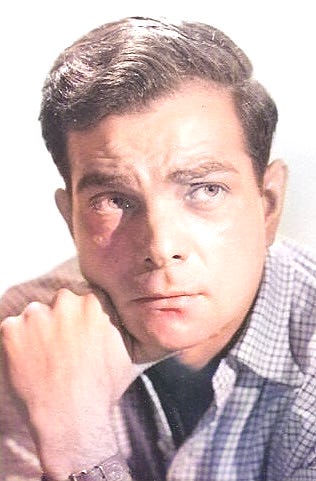
On 1 August 1983, Peter Arne was murdered.
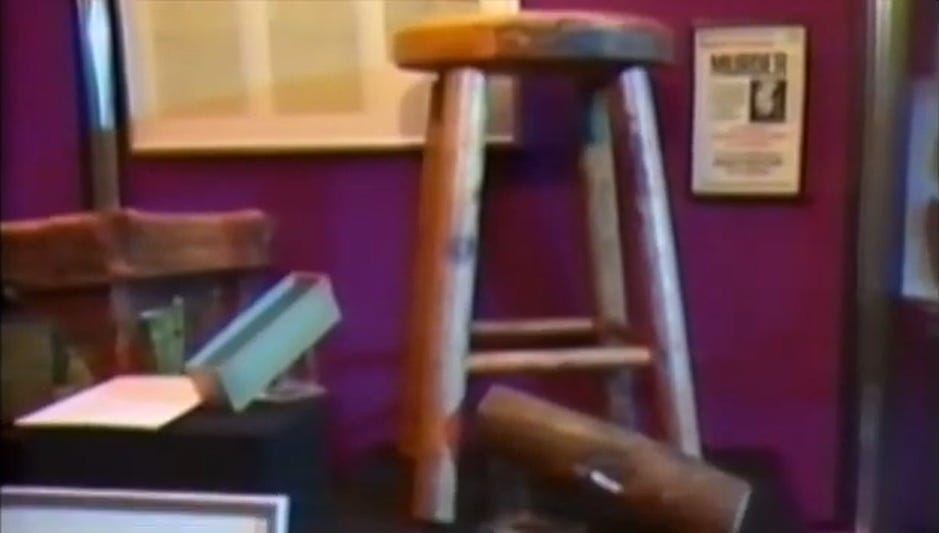
The actor’s body was found in his flat, having been brutally bludgeoned with a wooden log from his own fireplace. The killer didn’t stop there. While Arne was lying face down on the floor, they reached around and slashed Arne’s throat with a serrated kitchen knife, causing him to bleed to death within minutes. The killer then proceeded to pummel Arne’s head and face with a stool until he was unrecognisable.
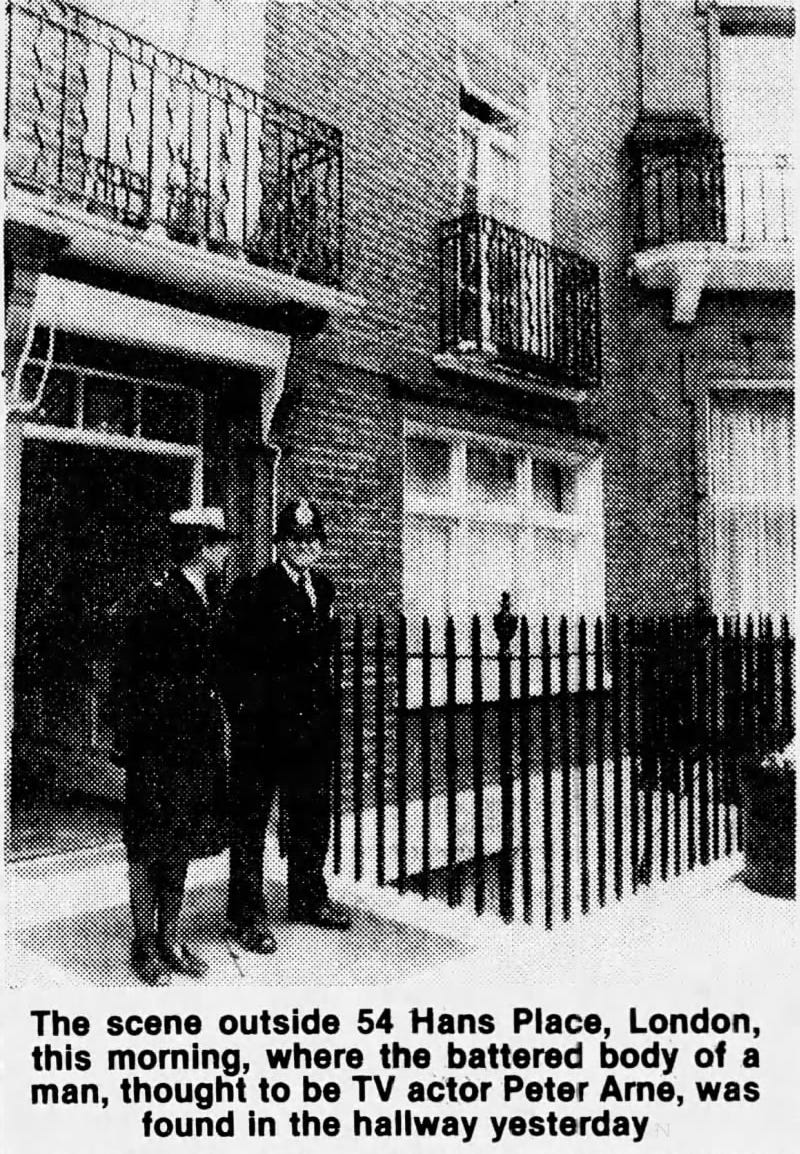
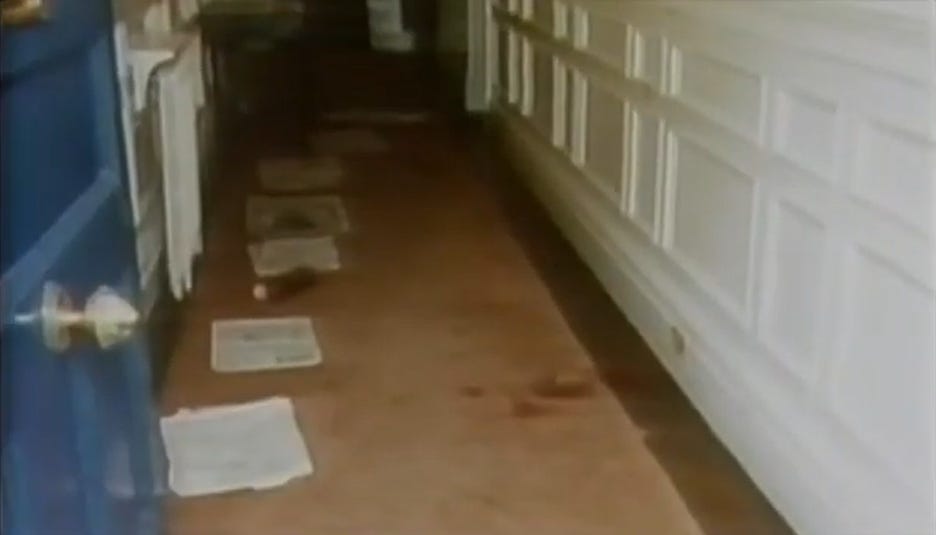
Arne’s body was discovered when the neighbour living in the basement flat beneath his, Mrs Roma James, entered the shared hallway of the apartment building at Hans Place, Knightsbridge. Finding bloodstains on the floor and wall, as well as Arne’s wallet and ring, James quickly raised the alarm.
The Metropolitan Police immediately sealed off the flat and CID officers began an investigation into the murder. Forensic experts were called in and police appealed for witnesses; anyone who was in the area of Hans Place between 14:00 and 17:00 that day.
Arne’s body was taken to Westminster Hospital for a post-mortem and his cause of death was established as a “torrential haemorrhage” from a severed jugular vein and carotid artery, according to pathologist Dr Ian West.
Arne had been savagely beaten with the fire log, stabbed in the face and then had his neck cut. Arne was already dead when he was dragged into the kitchen and battered in the head with a wooden stool.
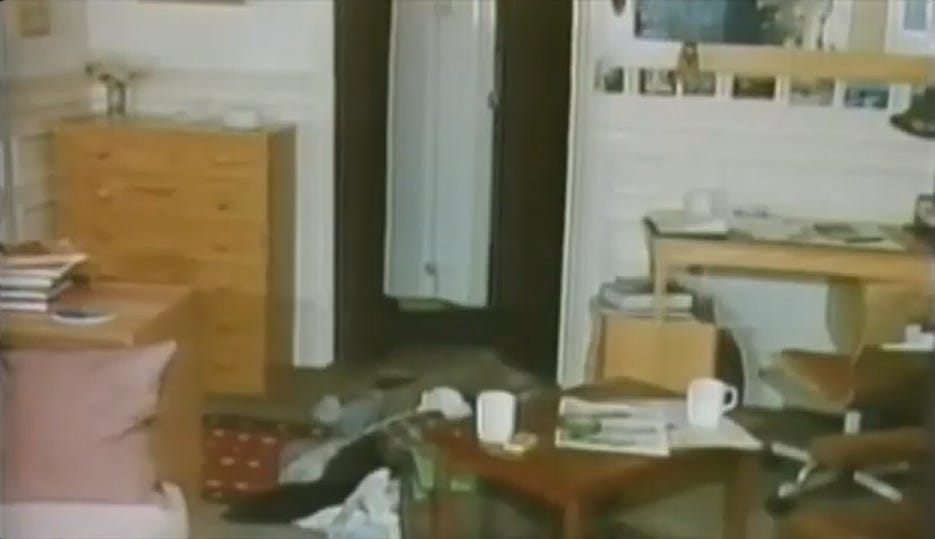
There had been no signs of forced entry or theft, which led police to believe that Arne knew his killer. Scotland Yard said that, due to the man’s facial injuries, they could not officially confirm that the victim was Arne yet, but there was little doubt it was him.
“We are treating it as murder and working on a theory that it could be Mr. Arne.”
Roger Carey, who had been Arne’s agent and manager since 1976 said:
“It is still speculation at the moment that this poor man is Peter. It is appalling, shattering, shocking news. This is brutal, bloody murder. I don’t know any reason why anybody should want to do this.”
Peter Arne, was sixty-four at the time of his death, and was described as one of the most recognisable faces in film and TV, although few people could put a name to that face.
A friend of playwright Noel Coward and director Blake Edwards, Arne had starred in films The Moonraker, Chitty Chitty Bang Bang, two Pink Panther movies, the excellent Straw Dogs and the even better The Third Man. Arne even had a recurring role on the notoriously awful BBC soap opera Triangle and had been due to begin filming an episode of Dr. Who.
Arne had lived at Hans Place since the late 1970s, which had been found for him by his friend Bernard Walsh. Arne also owned a house in Plymouth, which he shared with a twenty-nine year old man. Arne had been due to visit Plymouth the week of his murder, but had been held up in London due to a wardrobe fitting for the episode of Dr. Who.
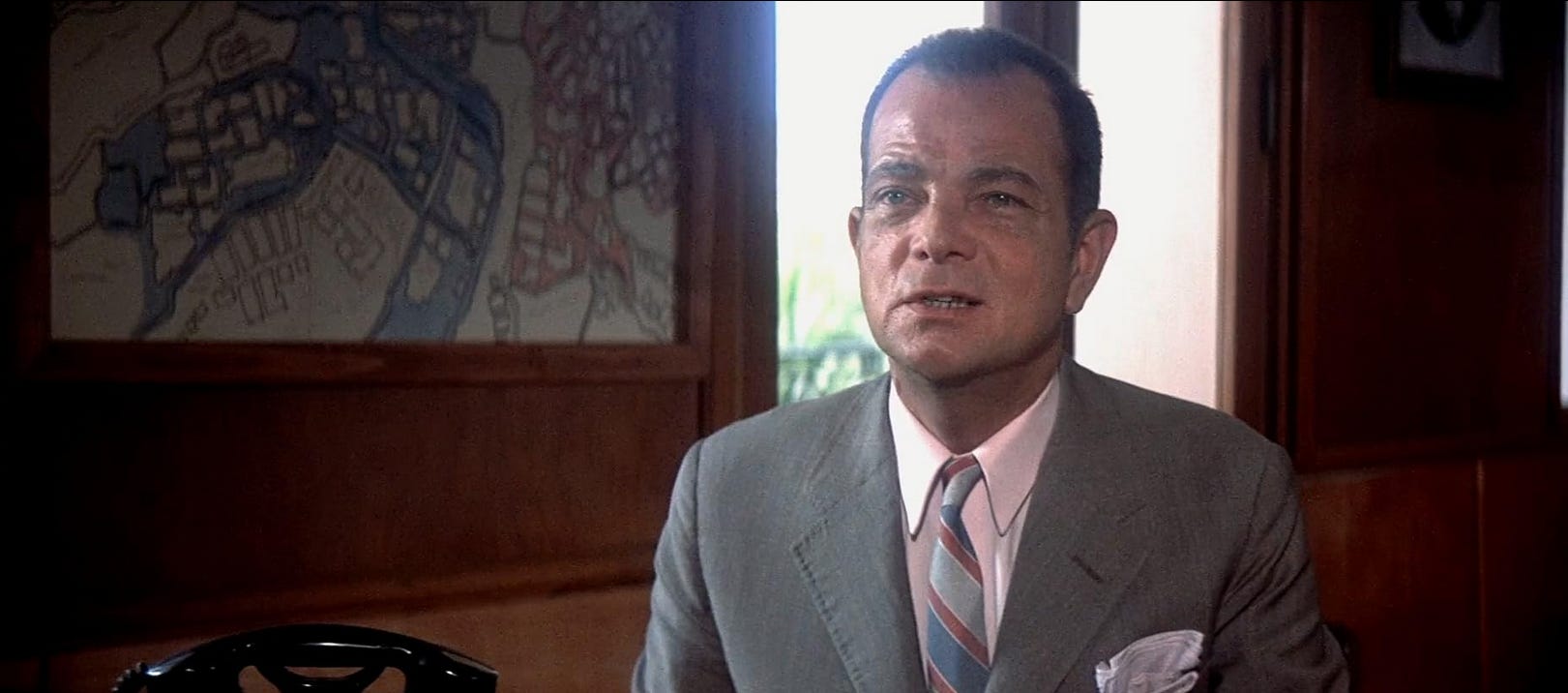
Peter Arne was born Peter Randolph Michael Albrecht in Kuala Lumpur in 1918 to a Swiss mother and an American father. Upon settling in Britain, Arne enlisted in the Royal Air Force and fought in the Battle of Britain during World War II. Arne’s plane was shot down over the English Channel, and he swam to safety through a minefield.
After leaving the Air Force, Arne became an actor in the mid-1940,. His first film roles were uncredited parts in war movie For Those in Peril and Georgian-period romance Saraband for Dead Lovers, although he more often performed on stage.
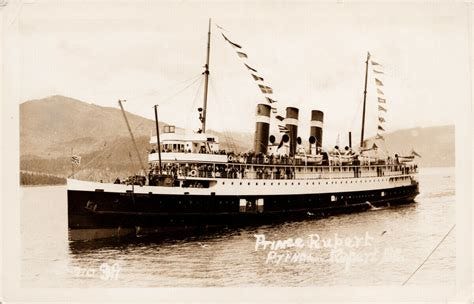
Towards the end of the decade, Arne and his lover - the tall and handsome Jack Corke - left the misery of post-war Britain and set sail for South Africa aboard the cruise ship the Cairo, a small and dirty inter-island steamer from the Hebrides.
When the ship docked at Aden, the Captain - greedy to make a quick buck - offered passage to Mecca to a hundred Arab locals, who swarmed the ship. This threatened to capsize the already jam-packed vessel and panicked the passengers.
Along with several other passengers, Arne and Corke took action. The group stormed the anchor and refused to allow the Captain to raise it unless the boat was cleared.
This move endeared the two to writer Mary Renault and her partner Julie Mullard, who were also travelling to South Africa for a new, less bleak life than was available in Britain. The two found Arne to be amusing, full of dreams and with a rapid-fire wit.
Renault and Mullard put their trust in the two men, telling them about £25,000 Mary had been awarded from Metro Goldwyn-Meyer studios for her novel Return to Night. The foursome pondered what to do with the money, with the idea of setting up a restaurant in Durban recurring.
The group separated, with Renault and Mullard touring Africa to see Renault’s cousin, while Arne and Corke pressed on to Durban to make preparations for their upcoming business.
When the four reunited, Arne and Corke presented Renault with a better proposition than a mere restaurant. The group were but a small fraction of those fed up with Britain and who had emigrated to South Africa. These expats would need housing, and using Mary’s money, the four could build houses to sell them.
Renault agreed to this and CAM Construction was formed. C for Corke and Challans [Renault’s real name], A for Albrecht, and M for Mullard.
Three plots of land were purchased by the beach in North Durban, a place where many English-style homes had already been built overlooking the Indian Ocean. CAM began to build luxury English homes. Initially things went well, they sold one house almost instantly, even though it wasn’t finished.
After six months things began to look different. The first house remained unfinished, and construction on the second two had barely begun.
The group had quickly burned through Renault’s money and she was forced to remortgage the house she had bought next to the construction site for additional funds.
Mary and Julie believed Arne and Corke weren’t pulling their weight. Corke, as treasurer, would let bills go unpaid right until the last minute and Arne seemed to be more planning than action.
They seemed to be doing little work, instead spending all their time taking Renault’s car away for weekends in the African countryside and would often eat at big restaurants in the town, throwing money around. They would host lavish parties for their friends on their building site, all of which was being funded by Renault.
Corke, especially, was an alcoholic and often a mean drunk. One drink would shift his personality and he would become sarcastic and condescending and this would lead to explosive rows with Arne, which had to be mediated by Renault and Mullard.
Arne would also brag to his friends, most of whom were actors, about Mary being a highly successful prize winning author, and wanted her to write plays for him to perform in.
Renault and Mullard slowly realised they were dependent on the two men - most of the people they had met in Durban had been through Arne. However the two women were seemingly stuck with them, and could think of no way to rectify the situation.
When the first house was eventually finished, the other two were worryingly behind schedule. Monsoons and gales made outdoor construction impossible. On the one year anniversary of CAM Construction, Renault realised that nothing had been accomplished and they were out of money.
Mullard went through the company records and the stacks of unpaid bills. She realised that the finances were in a mess and Corke and Arne were spending money without making any effort to construct the houses needed to keep CAM in business.
Renault met with her lawyer to come up with an exit strategy, a way for her and Mullard to sever the tainted relationship with Arne and Corke. The lawyer had a sexist attitude towards Renault and seemingly sided with Arne and Corke, saying they seemed like “good sorts”. Treating Renault and Mullard as hysterical women, he advised them to wait for everything to sort itself out.
Arne and Corke were eventually forced to resign from CAM when Renault found a better lawyer. They were still driving her car, which she reported as stolen, when she had them evicted from her house in Durban.
Arne and Corke left South Africa and the two went their separate ways. Corke, who was devoted to Arne, was an alcoholic who had tried to kill himself on one occasion because he was jealous of Arne’s friendships with other men.
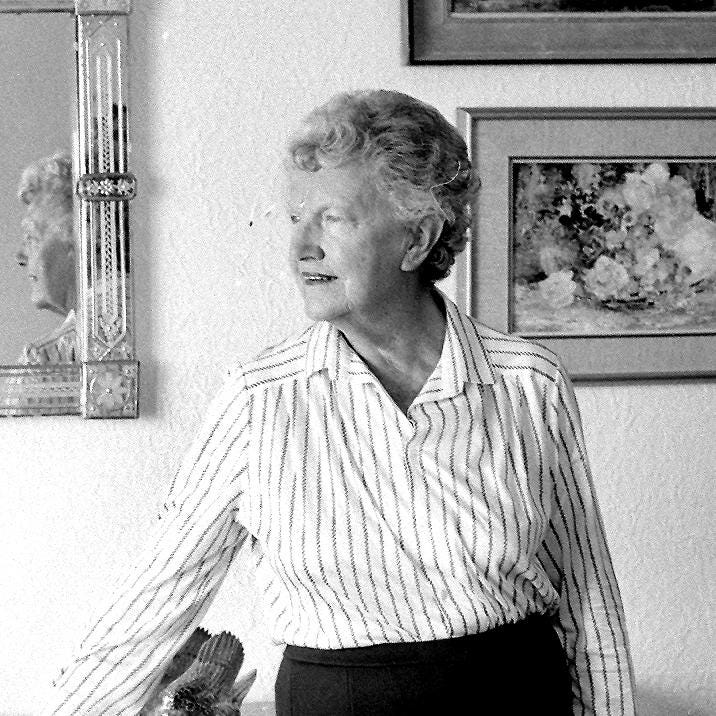
Arne returned alone to Britain in the early 1950s, settling in Leicester as an out-of-work actor. He worked as a toy salesman at Lewis’s, as well as running his own business buying and selling antiques.
Arne soon began performing on stage, and would sing at the Chepstow Theatre Club, adopting the stage name Arne for the first time. Performing clever renderings of Noel Coward’s “Nina From Argentina” alongside other acts such as Cy Grant and Ila Cameron, Arn received critical acclaim from reviewers at the time.
Arne continued stage acting when he joined Leicester Drama Society and played the lead role in Our Town by Thornton Wilder at the Little Theatre in 1950.
Geoffrey Burton, vice-president elect of the Leicester Drama Society produced a play in which Arne appeared in said after Arne’s murder:
“Peter Arne was a very talented actor and competent professionally. But he would never mix with the other actors. He was a very pleasant chap whose behaviour was always proper in every way. He gave no indication of being anything other than proper. I was very distressed when I heard about this shocking affair. It is sad to hear of such a violent death. Mr Arne’s visit to Leicester forms a piece of the county’s theatrical history.”
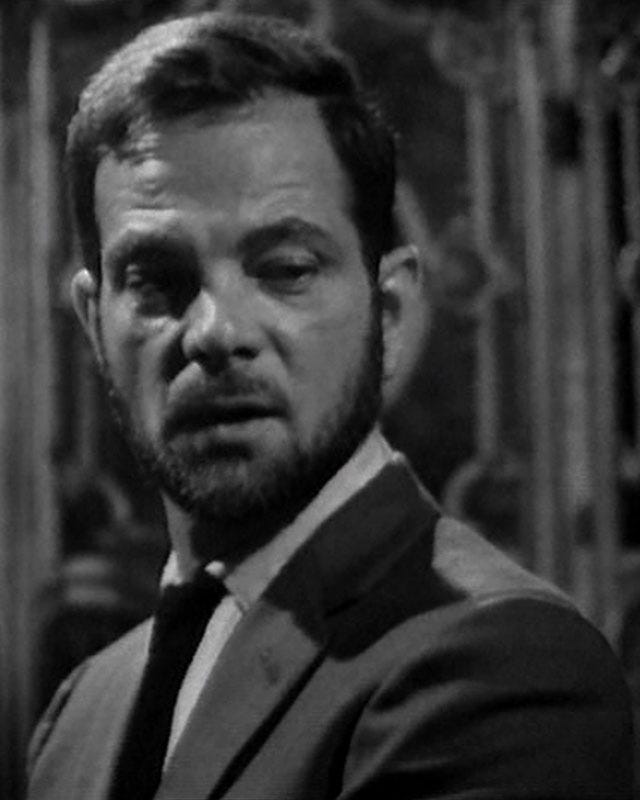
Arne’s first credited television role while living in Britain was for the BBC production of Donald Wilson’s play Stand by to Shoot, a mini-series about the difficulties of film production. He went on to become a prolific film and television actor for the next thirty years.
Peter Gray, a neighbour of Arne said:
“I had never spoken to him, although I recognised him. I hadn’t seen him for a long time and thought he might have moved away. Then about two weeks ago I was parking my car in the square when I noticed Mr. Arne standing with his back against the front door talking to two men with briefcases. They looked like businessmen and they seemed to be having a normal conversation.”
When Detectives found Peter Arne’s diary, they used it to build up a pattern of his lifestyle, discovering that he was gay.
Roma James told police:
“He kept himself to himself. I used to see him walking along the road, but people are not very friendly around here. I recognised him because I had seen him on television. He lived alone, but had lots of visitors. The people who called were almost exclusively young men, all on their own. There is a lot of coming and going at his flat at any time of the day or night.”
Police understood that Arne would visit some of the poorer areas in London and chat to people who “lived rough”, potentially cruising to pick them up for sexual encounters. They believed that this had played a role in his murder and wanted to trace his friends and associates.
At the inquest into Arne’s death, the coroner heard evidence from Tom Jackson. Jackson, who had travelled from Nottingham to London looking unsuccessfully for work, met Arne at Charing Cross station and was invited back to his flat for a bath and a hot meal.
Jackson said that at first when he stayed at Hans Place, that Arne made no improper moves. It was only after two nights spent in separate beds that the two slept together consensually.
Arne allowed Jackson to use his address to sign on the dole, something that initially made Jackson a suspect when Arne was killed, although he was eventually eliminated.
Jackson wasn’t the only person Peter Arne picked up, there were others. Bernard Walsh told police of a young Scottish man Arne had met under similar circumstances, known only as Graham, although he does not appear to have been a suspect in Arne’s murder.
This was a sensational revelation to the tabloids.
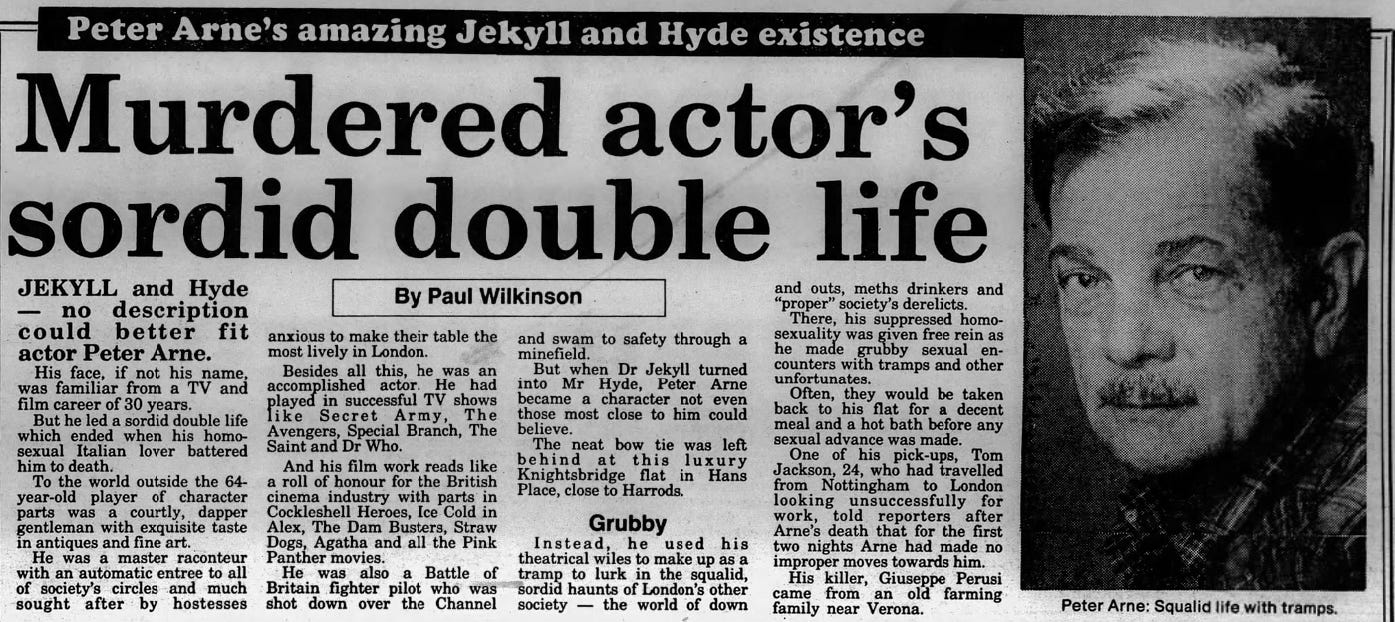
They tried to portray Arne as a perverted old man cruising London’s poorer areas in hopes of picking up down-on-their-luck men and using them for sex, all while using the alias “John Arnott”.
One newspaper accused Arne of living a seamy double life for years, dressing as a tramp and having sexual encounters with drop-outs.
Paul Wilkinson, writing for the Mail on Sunday wrote that Arne was a courtly, dapper gentleman with exquisite taste in antiques and fine art. Describing Arne as a master raconteur who was sought after by hostesses anxious to make their table the most lively in London, Wilkinson then turned on Arne, portraying him as a predator.
Wilkinson accused Arne of using his theatrical skills to dress up as a “tramp” to lurk around London’s squalid haunts, looking for sex with down and outs, meths drinkers and derelicts. In this disguise, Arne’s suppressed homosexuality was supposedly given free reign as he had grubby sexual encounters with tramps and other unfortunates.
Wilkinson then went on to write that Arne would take them back to his apartment before making a move on his prey, although how Arne was able to explain away the fact that he lived in a Knightsbridge flat to his conquests while cosplaying as a tramp, Wilkinson does not explain.
Of course the idea of Arne dressing up as a homeless man and prowling the foggy streets of London like some kind of queer Jack the Ripper is ludicrous.
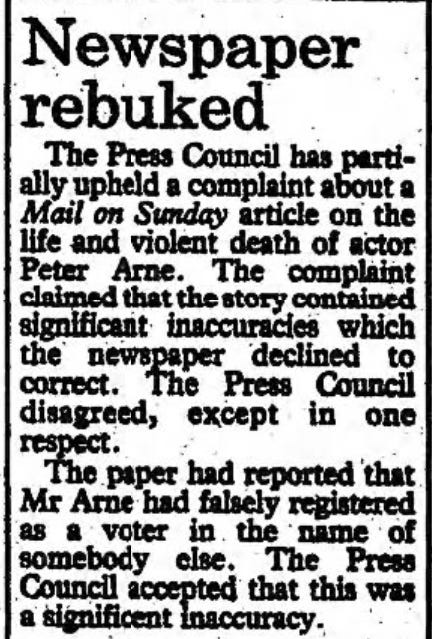
A complaint about Wilkinson’s inflammatory and homophobic article was made the the Press Council. The story was found to contain significant inaccuracies and the complaint was upheld, but the Mail refused to print a correction.
Arne’s friends rejected the idea that he lived some kind of seedy, sordid life. They ruled out that Arne was using a secret second name to cover up his clandestine affairs, telling the press that John Arnott was not an additional identity, but rather the name of the man who rented the 54 Hans Place before Arne.
Instead they described a man who was shy, sensitive and gentle. They believed that the police inquiry had created the impression that Arne was a perverted old man scouring London’s gay bars in search of a casual affair.
Arne’s friend, actress Sylvia Syms, whom he had known since 1955:
“That is so wrong, so very far from the truth of the man. Wrong. Peter was a lovely dear friend. The impression being created that he was a randy old idiot scraping around is so awful and dreadfully wrong. Peter was one of those people who was neither pushy nor particularly ambitious.”
Actress Dilys Laye said:
“It is so false that the impression being created of Peter is a sordid one. I knew him very well and I can tell you he was a sensitive, gentle and generous man. He was elegant, a man with class and style, and not this sort of person who is being portrayed in the gutter press at the moment.”
Angela Douglas, widow of Kenneth More:
“He was a lovely gentle person, someone who was very supportive in my time of stress. He has been grossly libelled.”
On the morning of his murder, Arne had left his flat for an appointment at the Department of Health and Social Security, before travelling to his costume fitting. Martin Gellman, the taxi driver who ferried Arne around that afternoon was traced by officers.
Gellman said that he had been hired earlier by Arne and waited for him while he was being fitted for the costume he would have worn for his part in Dr. Who at a theatrical costume shop near Clerkenwell Green at 12:15.
Gellman took Arne straight home from the fitting, arriving a little after 12:30 and police thought it unlikely that Arne had left his flat again after this.
Police initially suspected that Arne had been accompanied by another person on his taxi ride home, however, I can find no mention of Arne having someone else with him in the taxi, so it is possible that the taxi driver confirmed the police’s theory to be false.
Arne’s friend Bernard Walsh said he had tried calling Arne several times that morning, although the call would not connect because the receiver had been left off the hook. Walsh finally got through to Arne at around 13:15, where they had a normal conversation and Arne told Walsh what errands he had run that morning.
This final conversation occurred less than an hour before Arne was killed.
Neighbours reported hearing an argument in the apartment at around 14:00, and it was estimated that this was the time of Arne’s murder. Roma James heard scuffling and a distressing altercation coming from Arne’s flat and Keith Pledger, a decorator in another flat also heard the scuffle:
“I could hear noises through the intercom, as though someone was shouting to get out then being dragged back. It was as though someone was trying to speak through the intercom, then someone placed a hand over their mouth.”
The attack took place in the communal passageway of the apartment complex but Arne’s body was found inside the flat itself. After being bludgeoned with the log, Arne had been dragged back into the flat where he received fatal injuries.
Police questioned hundreds of witnesses, some of whom reported that a young “scruffy” looking man had been seen lurking near Peter Arne’s ground floor-flat on the morning of the murder. The man was described as “not well dressed” and was carrying a rucksack.
Later sightings of the same man had him wearing a navy blue tracksuit.
Estimates of his age varied but he was white, probably about twenty-five and stood between 5ft 9in and 6ft 1in tall, and was “proportionally built”. He had fair curly hair with light streaks, a full beard and was tanned. The man also carried an olive green rucksack. He was scruffy and dirty and it looked like he’d slept in his clothes.
Scruffy Man was seen several times on Monday before Arne’s death, having been spotted first between 8:00 and 9:30. The man was seen later in the morning, hanging around both sides of the street near Arne’s home and also round the corner in Hans Crescent.
Lillian Wallen saw the man outside her home in Herbert Crescent, he was sitting on some steps, eating honey and brown bread. Mrs Wallen would later identify a passport photo and said he was the same man she had seen in Hans Place on the day of the murder.
Postman Stuart Aldridge said he had been approached by Scruffy Man, who spoke no English other than asking for “Peter”.
On 9 August, Scotland Yard released a photofit picture of the bearded mystery man along with a statement:
“We want to see this man, but we are also following other lines of inquiry and we don't want people to concentrate on him alone. We do not yet know what part this man played in the murder but we feel he could possibly help us with our inquiries.
We are certain from a number of people living in the area that this man was seen hanging around on the day Mr. Arne was killed. We are also certain that for some reason he changed his clothes from the safari suit to the track suit.”
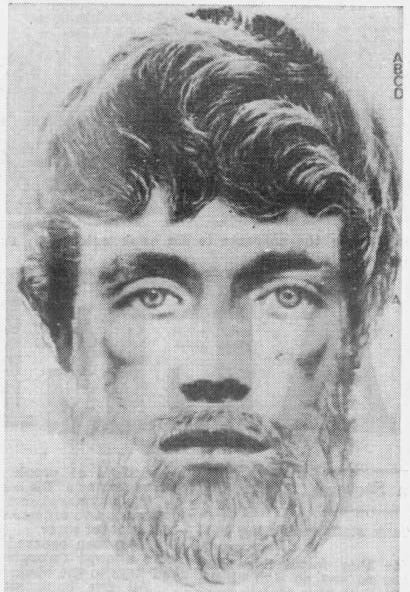
Peter Grey, Arne’s neighbour, had also spotted this man:
“He looked suspicious because there was no reason for him to be there. He seemed worried and I thought he must have been waiting for someone.”
Police received telephone calls following the publication of the photofit picture, claiming that they had had an excellent response.
Sadly, these calls did not lead anywhere, as the Scruffy Man was already deceased.
On 4 August, the body of the Scruffy Man was recovered from the river Thames.
Sergeant Ronald Grisedale of Thames Police was notified of a body floating in the river. The body was retrieved at Wandsworth Reach and taken to the floating Waterloo Pier station and police estimated that it had been in the river for about two days.
The body was completely naked, except for a piece of cloth tied tightly around the left ankle. Grisedale said he had some difficulty untying the knot and the sergeant believed it to be a scarf.
Meanwhile, Detective Andrew Johnson was on duty at Wandsworth station when a bundle of clothing was brought to the station, having been found near the river Thames at Wandsworth.
It included a right brown desert boot, one pair of grey socks, one pair of blue underpants, a green zip up jacket, an Italian passport, some Spanish money and some keys on a ring. There was also a receipt from a Chelsea hotel.
The following day, Johnson took the clothes to Waterloo Pier station, and when the clothes were examined more closely, there was found to be blood on them.
Johnson said:
“I know about Peter Arne’s murder. So I contacted Chelsea Police station because of the bloodstained clothing and I rang the murder squad. I had been based at Chelsea before I went to Wandsworth, so I knew the men there.”
The body in the river was identified as thirty-two year old Giuseppe Perusi. His passport photo matched that of the photofit and his fingerprints had been found inside Arne’s flat. Perusi had died in the river shortly after Arne’s murder, his body lying in the mortuary while police searched London for him.
Perusi was an Italian school teacher who taught handicapped children. He came from an old farming family in Negrar near Verona and he had obtained a degree from Verona University.
The pink scarf which was tied around his ankle had been a gift from his ex-girlfriend Daniella Saoncella.
Detective Chief Inspector Landeryou:
“I think that the scarf is very relevant, because it could have been some sort of peculiar sentimental issue, as it was a present from his girlfriend.”
The fact that Perusi taught handicapped children and this sometimes made him depressed was brought up. He was unhappy in the manner in which the school was run.
Police:
“He was depressed about the running of his farming co-operative and the school he worked at. He had recently ended a relationship with a woman named Eleanora, which depressed him even more. He had discussed suicide with his relatives. He asked his school governors for a holiday and travelled through Europe, arriving in England in the middle of June.
He had lost his trust in women and felt he might find men more understanding of his problems and way of life. He was living in London parks and sleeping rough.”
His sister Anna Maria travelled to London for the inquest and to fly back to Italy with his body for burial.
Negrar police said:
“He was a good boy, but inclined to be slightly over anxious when minor problems arose. He was a member of the local communist party and had been elected for two years to the town council.”
Police initially did not discount the possibility of there being a second man involved in Arne’s death. There was a suggestion that Perusi may have been accompanied by another man when he was seen outside Arne’s flat, although this was later dismissed during the inquest.
Police were also not certain at first that Perusi had committed suicide, noting that his body was naked when he was recovered from the Thames at Wandsworth Reach.
“Most suicides do not remove their clothes, it is possible that Perusi may might have gone into the water to cool down. Perusi was in the habit of sleeping rough and was a swimmer, so it would have been in character for him to strip and take a plunge in the river.”
The inquest tried to build a picture of how Peter Arne and Giuseppe Perusi had met, and shed more light on Arne’s death.
John Ryan of Egerton Terrace, said that he [Ryan] had been living rough five to six weeks prior to the murder and had met Peter Arne in Embankment Gardens and become friends.
On 26 July, when Ryan got home from work, he found that Arne had left a note asking to contact him at Hans Place that evening.
As the two catched-up, Arne told Ryan that he had to meet someone in Hyde Park and give him some sandwiches.
“He told me that the man looked a bit like Jesus Christ and was a docile person. I have seen him, he is a foreign man.”
When police showed Ryan a photograph of Perusi, he identified him as the man he had seen with Arne previously.
The inquest also described Arne as a dedicated, if discreet homosexual who prowled London parks and train stations looking for young men. His “targets” were young men of reasonable appearance but perhaps down on their luck.
This was almost certainly how Arne had found Perusi.
Police had found an entry in Arne’s diary that they suspected to be a contraction of Perusi’s first name. There was an appointment for 4 August to meet “Guiseppe” [sic]. It was theorized that Perusi arrived to meet Arne on the wrong day and had loitered around Arne’s flat, waiting for him to return.
Another report even speculated that Arne and Perusi may have met three years before, when Arne was in Verona filming The Little World of Don Camillo, although there is no evidence to suggest this is true.
Perusi’s fingerprints were found in Arne’s flat and diluted blood was found in the sink. Bloodstained clothing found at the apartment indicated that Perusi had washed and changed before leaving.
However, this did not explain the bloodstains found on Perusi’s clothing found next to the river later in the week.
Dr Christopher Price, a forensic scientist, put forward the theory that it was after changing clothes that Perusi attacked Arne’s dead body with the stool.
Detectives also found Perusi’s olive rucksack with bloodstains and a honey jar, something that he had been seen in possession of earlier that morning.
The coroner, Dr Paul Knapman recorded verdicts of unlawful killing on Arne and suicide on Perusi:
“Everthing points towards Giuseppe Perusi killing Peter Arne. He was a depressed man anyway and he talked of suicide to his family. If he had just performed a brutal murder then his mind would have turned to killing himself.”
Peter Arne was buried at Putney Vale Cemetery and Crematorium and a memorial service was held at St. Paul’s Covent Garden, known as The Actor’s Church due to its connections with the theatrical community. Arne left his £22,821 - £75,909 in 2025 - estate to his friend and executor Bernard Walsh.
Over forty years later, the murder of Peter Arne still remains a mystery. Was Giuseppe Perusi really responsible for the sadistic murder? If so, what was his motive? Had there been a third man in the flat along with Arne and Perusi? What caused detectives to believe this was the case early in the investigation? Did Perusi intend to kill himself when he lept into the Thames following the murder?
Police speculated that Arne may have propositioned Perusi sexually, and in a rage, Perusi murdered the actor. Another theory suggested that Perusi and Arne had slept together, and Perusi was filled with shame and remorse which soon turned to fury.
Whatever the reason, the fact is Peter Arne was the victim of a cruel and hideous attack which cost him his life. The people that knew Peter spoke of his kindly and gentle nature, and condemned the British tabloids for switching the narrative - portraying him as a sexual deviant and a weirdo.
This was victim blaming at its worst and reflected the homophobic attitude of the time, which sadly, still persists today. ■
GARGOYLE is a reader-supported publication. To support us, you are encouraged to consider becoming a free or paid subscriber, or by forwarding us to friends and colleagues.
Thanks for capturing in such detail this poignant snapshot of a particular age. I was watching “When Eight Bells Toll” on TV and saw Peter’s name in the cast list and googled him, which led me to your Substack. This feels like a a past we’ve left behind, but maybe not for all gay men.